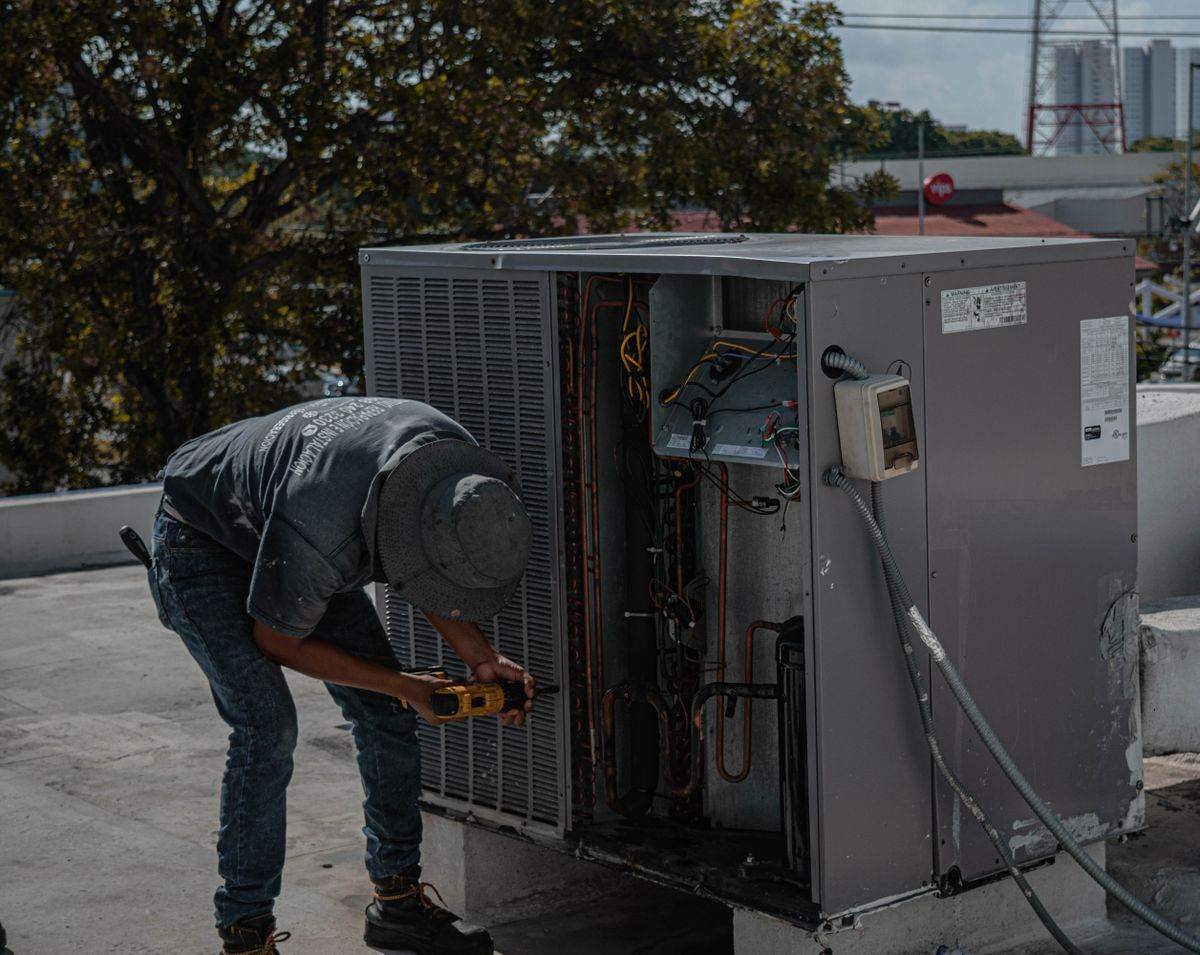
How much do hvac technicians make?
HVAC Technicians earn a median $29.33 an hour ($61,010 a year) nationally, according to BLS OEWS May 2025. The BLS counts 409,670 hvac technicians working in the US. Employment is projected to grow +8.0% from 2024 to 2034. BLS projects about 40,600 hvac technicians openings a year from 2025 to 2035.
National median pay
$29.33/hr
National median annual
$61,010
full-time, 2,080 hrs
25th percentile
$23.25/hr
a quarter earn less
75th percentile
$37.05/hr
a quarter earn more
US employment
409,670
Projected growth
+8.0%
2024 to 2034
Openings per year
40,600
2025 to 2035
Union wage premium
+37.8%
union vs nonunion
Fatal injury rate
6.7
per 100k workers, 2024
Entry difficulty
Job Zone 3
medium preparation needed
Where hvac technicians pay the most
All 25 metros ranked by median hourly pay, from BLS OEWS May 2025. Toggle to cost-of-living adjusted pay to compare what the money actually buys. Each row opens the full HVAC technician page for that metro.
HVAC Technicians pay by metro: highest to lowest median
Median hourly pay in all 25 metros. The top 10 are highlighted.
Pay by industry
Where hvac technicians earn the most
Top 8 of 106 published industries by national median hourly pay. These are national figures.
Industry pay: BLS OEWS, May 2025. Industries with suppressed BLS figures are not listed.
Related trades
Related trades to compare
Entry difficulty: Job Zone 3: medium preparation needed.
O*NET lists these occupations as related to hvac technicians, ranked by national median pay. Each link opens that trade's salary hub.
- Plumbers, Pipefitters & Steamfitters$30.67/hr US median
- Automotive Service Technicians$24.34/hr US median
- Maintenance & Repair Workers$23.84/hr US median
Related occupations and Job Zones: O*NET 31.0 Database, U.S. Department of Labor.
Hiring demand
Job openings for hvac technicians
40,600
Projected hvac technicians openings per year nationally, 2025 to 2035. About 35,700 of those replace workers who retire or change occupations; the rest comes from job growth.
BLS Employment Projections, 2025-2035.
Monthly demand signal
Construction hiring trend
8.36M
Construction workers employed in August 2026, up 1.5% from a year earlier.
Buildings (236)
up 1.5%
vs year earlier
Heavy and civil (237)
up 2.3%
vs year earlier
Specialty trades (238)
up 1.3%
vs year earlier
Production and nonsupervisory workers in construction averaged $39.36/hr in August 2026, up 5.0% from a year earlier. Supervisory pay is not included.
These are national construction-industry figures, not hvac technicians-specific. Useful context for demand, not a pay quote for this trade.
BLS Current Employment Statistics, seasonally adjusted, through August 2026. The latest month is preliminary and subject to revision.
Getting in
How to become HVAC technician
10,712 active HVAC technician apprentices nationwide in FY2024, per the Department of Labor (+138.8% since FY2014). The standard path is a registered apprenticeship: paid on-the-job training plus classroom instruction. States with the most active apprentices:
- California1,448 apprentices
- Florida1,085 apprentices
- Iowa831 apprentices
- Virginia712 apprentices
- New Jersey711 apprentices
DOL Registered Apprenticeship, FY2024.
Do union hvac technicians earn more?
Yes, by a wide margin. Full-time union members in this occupation group have median weekly earnings of $1,571, versus $1,140 for nonunion workers: a 37.8% union wage premium, or about $431 more per week. The Bureau of Labor Statistics cautions these comparisons don’t account for age, firm size, industry, or geography. They are the official national figures.
Union wage premium, 2025 (est. from national medians)
+37.8%
$1,571/week union vs $1,140/week nonunion (across all workers: +19.6%)
Median weekly earnings, full-time workers, 2025
Union wage premium by trade, ranked
- 01Electricians+55.5%
- 02Plumbers, Pipefitters & Steamfitters+55.5%
- 03Carpenters+55.5%
- 04Painters (Construction & Maintenance)+55.5%
- 05Roofers+55.5%
- 06Landscaping & Groundskeeping Workers+52.0%
- 07HVAC Technicians+37.8%
- 08Automotive Service Technicians+37.8%
- 09Maintenance & Repair Workers+37.8%
- 10Welders+22.9%
Median usual weekly earnings from the 2025 BLS Current Population Survey, union membership annual release (Table 4): full-time wage and salary workers, sole or principal job. BLS publishes union-earnings figures for the broader group “Installation, maintenance, and repair occupations”; these premiums are national and do not vary by metro. All self-employed workers are excluded. 2025 is an 11-month average (October not collected during the federal shutdown).
Workplace injury rates for hvac technicians
Pay is only part of the picture. In 2024, 33 hvac technicians died from work injuries for a fatal injury rate of 6.7 per 100,000 full-time workers, 2× the national average. These are national rates for the occupation, published by the Bureau of Labor Statistics.
Fatal work injury rate, 2024
6.7 /100k FTE
2× the national average (national average: 3.3 per 100,000)
Nonfatal injuries & illnesses, 2023 to 2024 (annualized)
214.5 /10k FTE
cases involving days away from work, per 10,000 full-time workers (private industry), 2.5× the national average (national average: 86.6). BLS publishes occupation-level figures every two years; this is the latest release.
Fatal injury rate by trade, ranked
- 01Roofers48.7/100k
- 02Landscaping & Groundskeeping Workers20.9/100k
- 03Maintenance & Repair Workers10.8/100k
- 04Carpenters7.5/100k
- 05Plumbers, Pipefitters & Steamfitters6.9/100k
- 06Welders6.9/100k
- 07HVAC Technicians6.7/100k
- 08Painters (Construction & Maintenance)6.6/100k
- 09Automotive Service Technicians6.3/100k
- 10Electricians5.3/100k
Fatal injury rates from the 2024 BLS Census of Fatal Occupational Injuries: deaths per 100,000 full-time equivalent workers, by occupation, private and public sector. 2024 is the latest published year; BLS releases 2025 data in December 2026. Rates are national; they do not vary by metro. BLS rates are hours-based and use survey employment denominators subject to sampling error.
The Paycheck
Get the weekly pay email
One email a week: the biggest pay moves, new data drops, and one featured metro. No spam, unsubscribe anytime.
Frequently asked questions about hvac technicians pay
How do I become HVAC technician?
Through a registered apprenticeship: paid on-the-job training plus classroom instruction, typically lasting several years, with wages that rise as you learn. The DOL counted 10,712 active HVAC technician apprentices nationwide in FY2024. Search open programs at Apprenticeship.gov.
Is becoming HVAC technician worth it financially?
The numbers are strong: hvac technicians earn a median $29.33 an hour nationally (BLS OEWS May 2025), with BLS projecting about 40,600 openings a year from 2025 to 2035. Pay varies by city and experience; the metro ranking above shows where the premium is.
Where do hvac technicians earn the most?
Seattle, WA pays the most of the 25 metros tracked: a median $38.51 an hour. By industry, Computer Systems Design and Related Services pays the most nationally at $55.73 an hour. Both figures are BLS OEWS May 2025 medians.
Do union hvac technicians earn more?
Yes. In 2025, full-time union members in installation, maintenance, and repair occupations earned a median of $1,571 a week versus $1,140 for nonunion workers, a +37.8% premium. These are national BLS figures; contracts often add benefits the wage figures do not capture.
How dangerous is HVAC technician work?
The BLS recorded a fatal work injury rate of 6.7 per 100,000 full-time workers for heating, air conditioning, and refrigeration mechanics and installers in 2024. The nonfatal injury and illness rate was 214.5 per 100 full-time workers. Safety records vary widely by employer, so these national rates describe the occupation, not any single jobsite.